
Agents pick a neighborhood they like, not one where homes actually sell often enough to produce listings.
Agent play · Geographic farming
Farming postcards that make you the neighborhood's agent.
Geographic farming works when you pick the right neighborhood and show up every month with something useful. Spur helps you choose a farm by turnover, mail personal postcards that reference each street, and see which homeowners are checking their home value.
Free forever plan · No card · 20 property searches a month
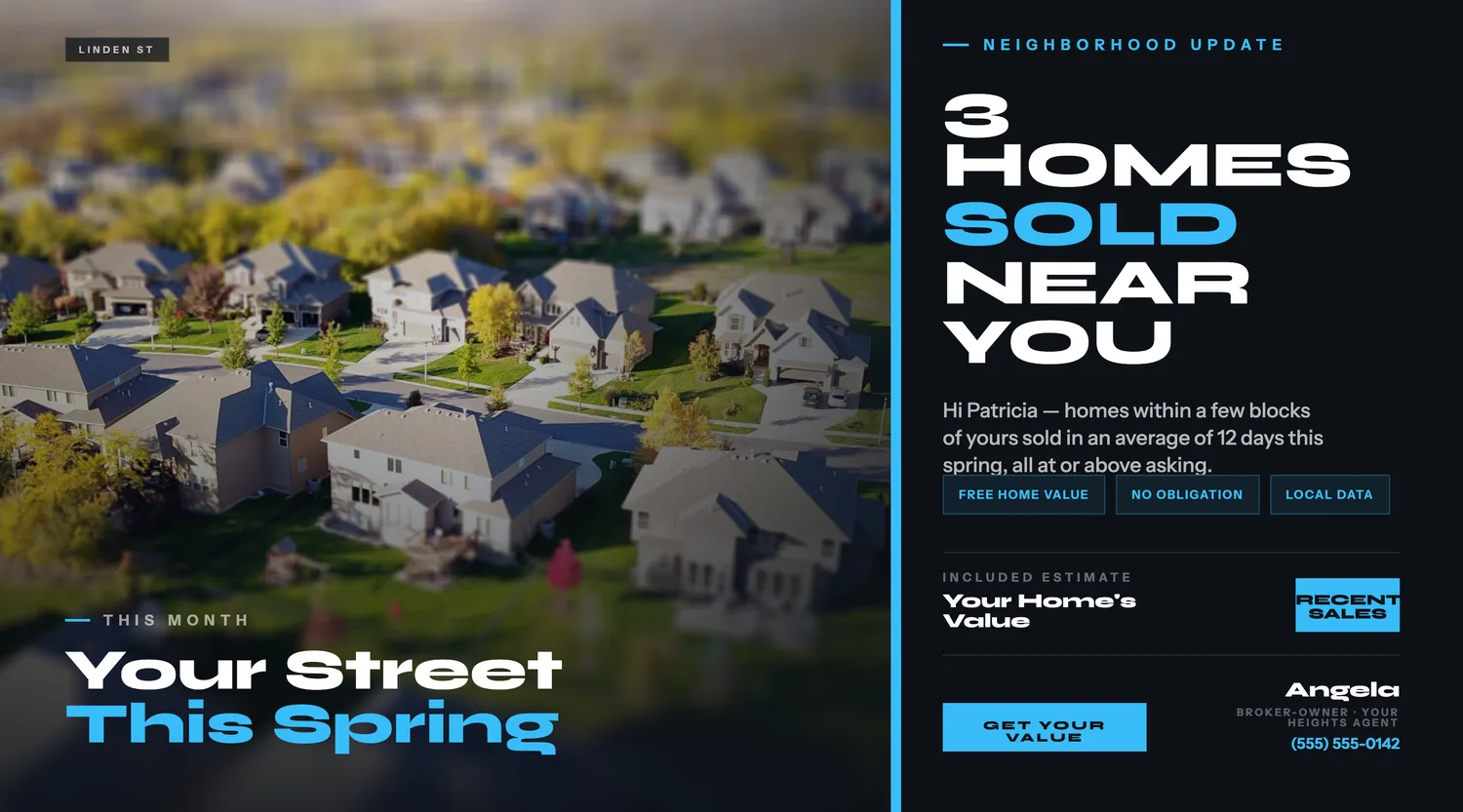
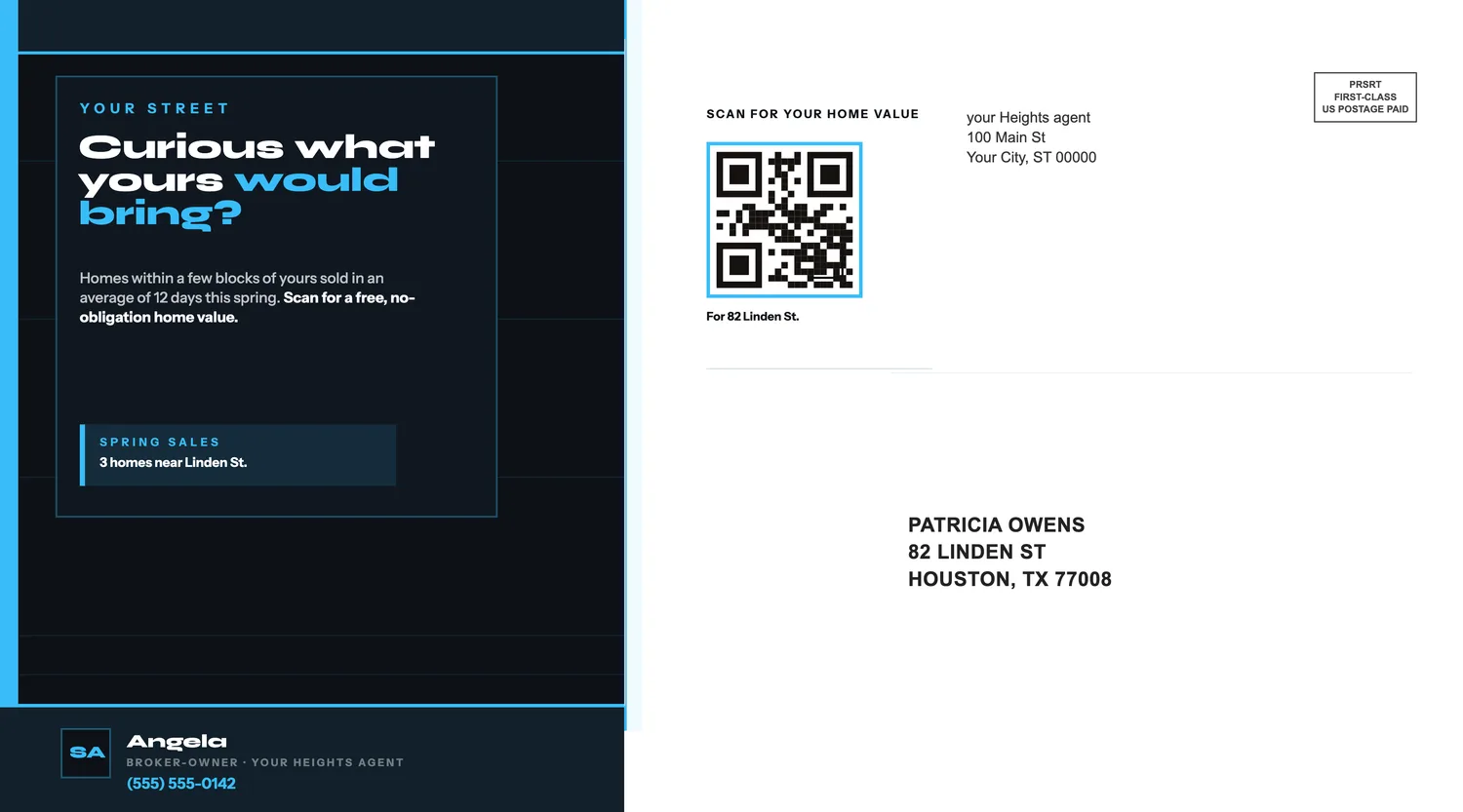
Patricia O. checked her home value · 2 min ago
AI-written for this owner · Mailed in 2 days
Turnovermath to pick a farm that produces
Monthlypersonal cards on autopilot
QRhome value alerts by household
The problem
Most farms fail before they have time to work.
Mailing 2,000 homes every month is expensive. Most agents quit after three months.
A generic "thinking of selling?" card goes straight into the recycling.
How it works
From list to mailbox in one workflow.
Five steps from farm selection to listing appointment.
app.usespur.com
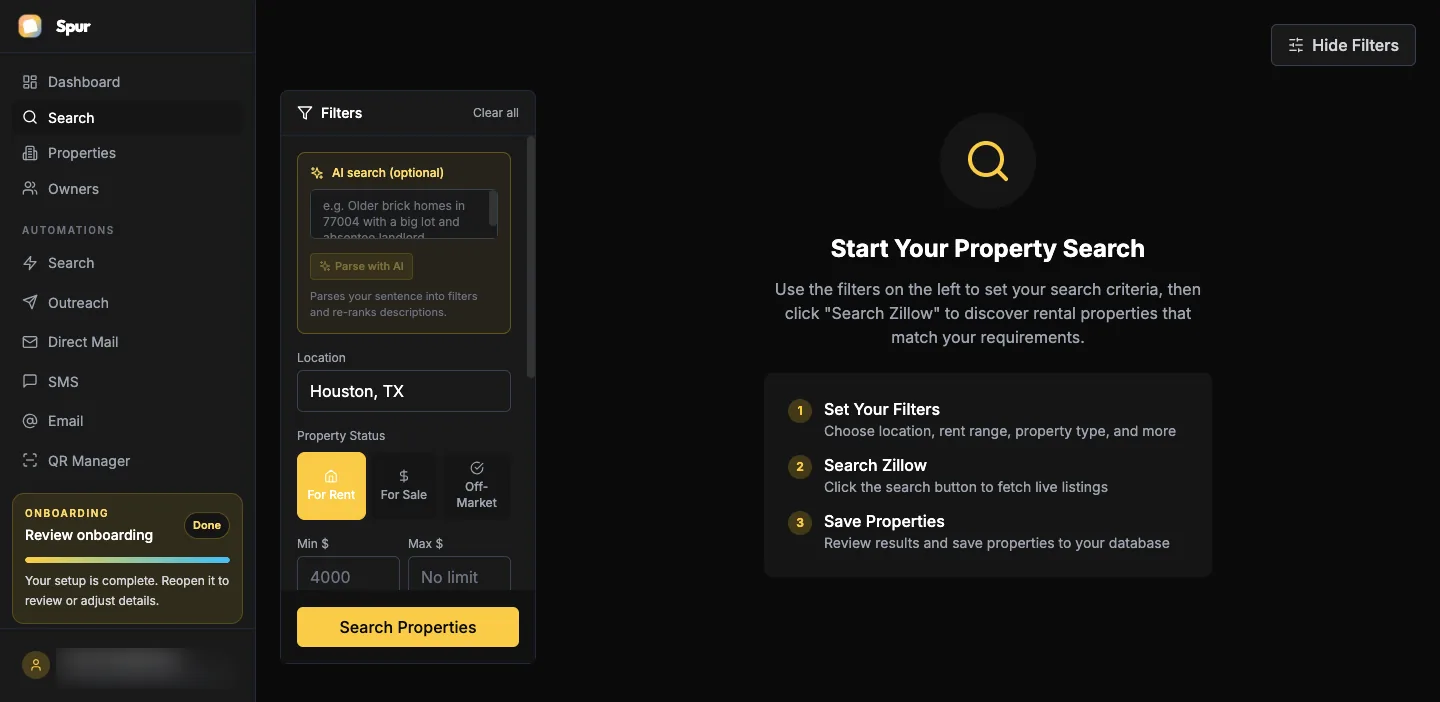
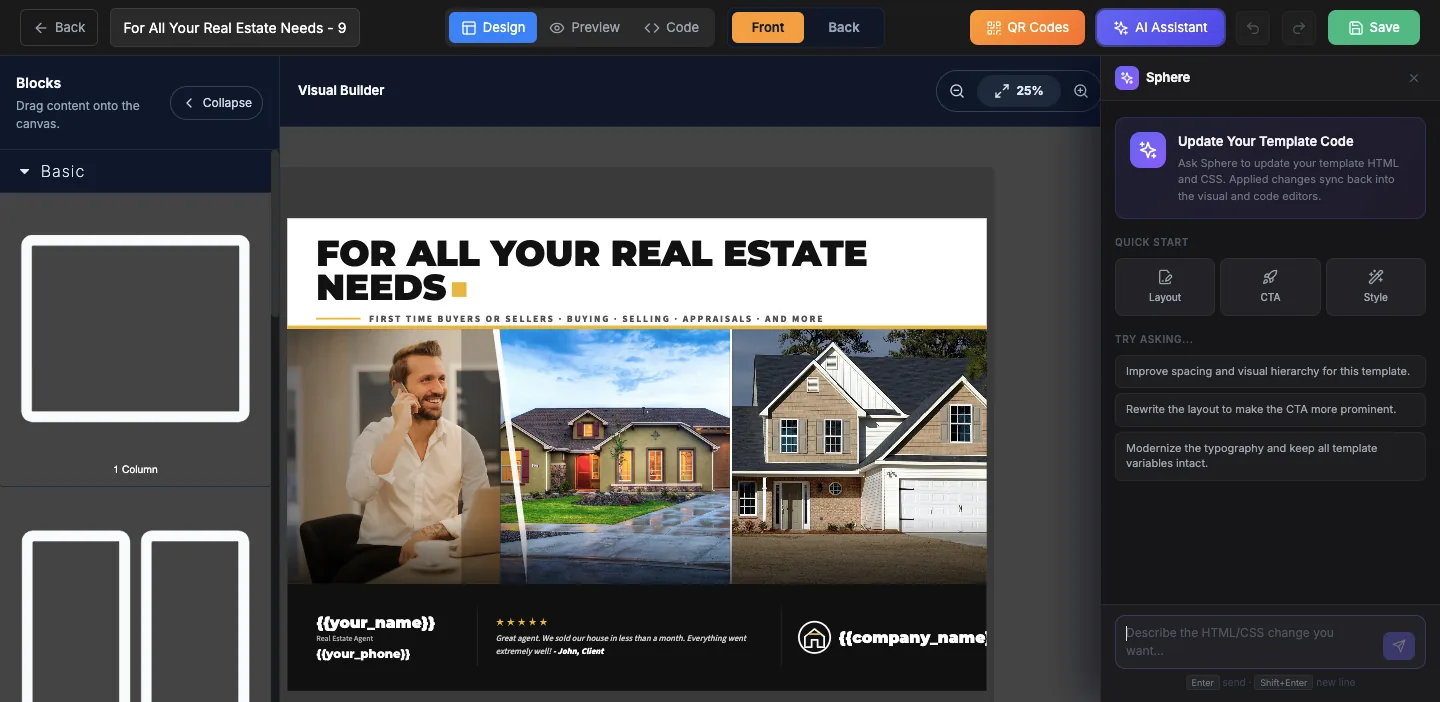
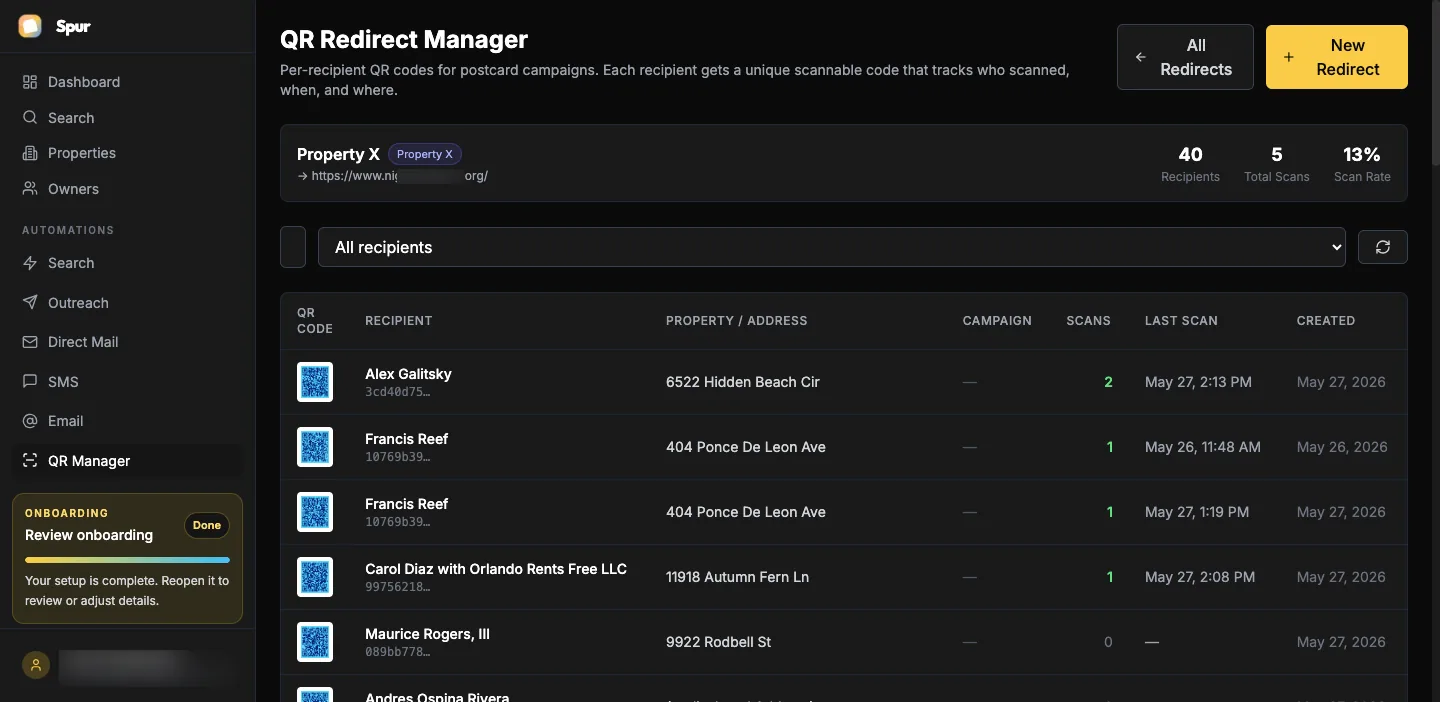
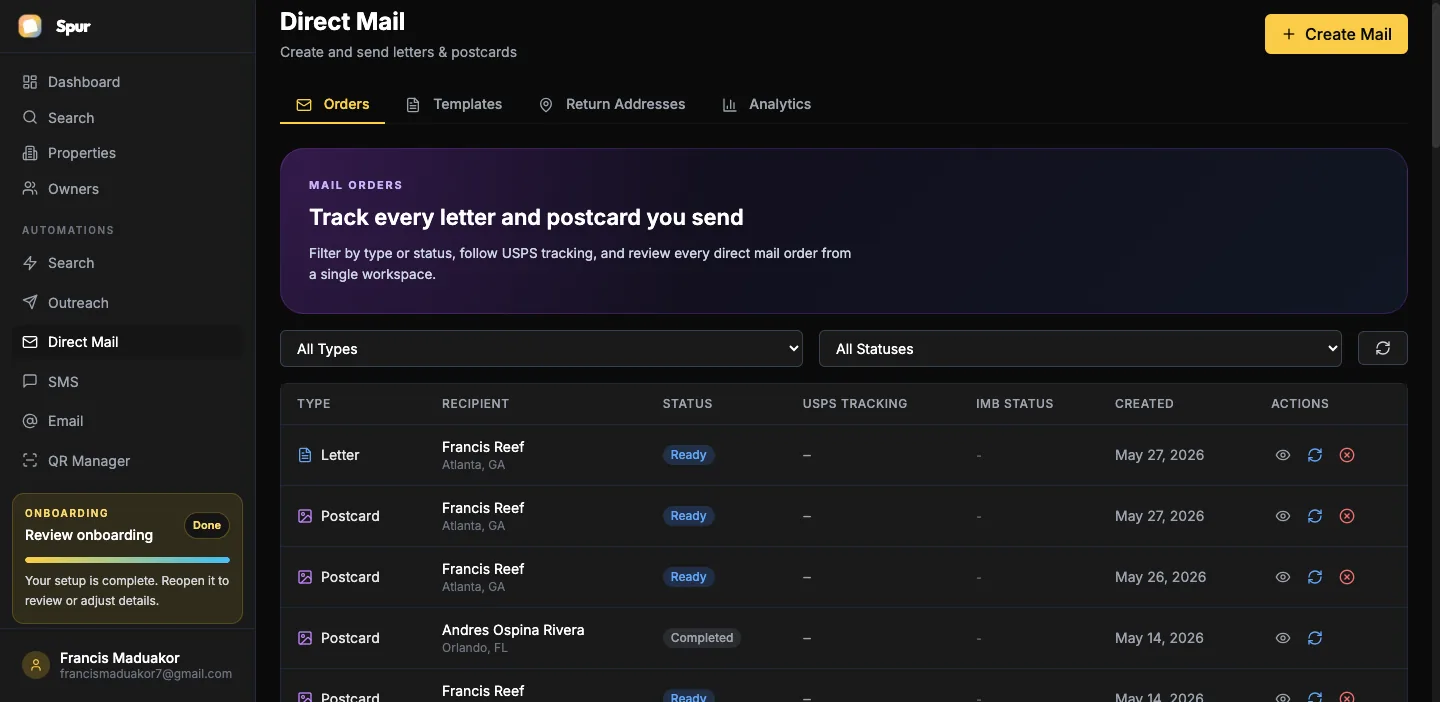
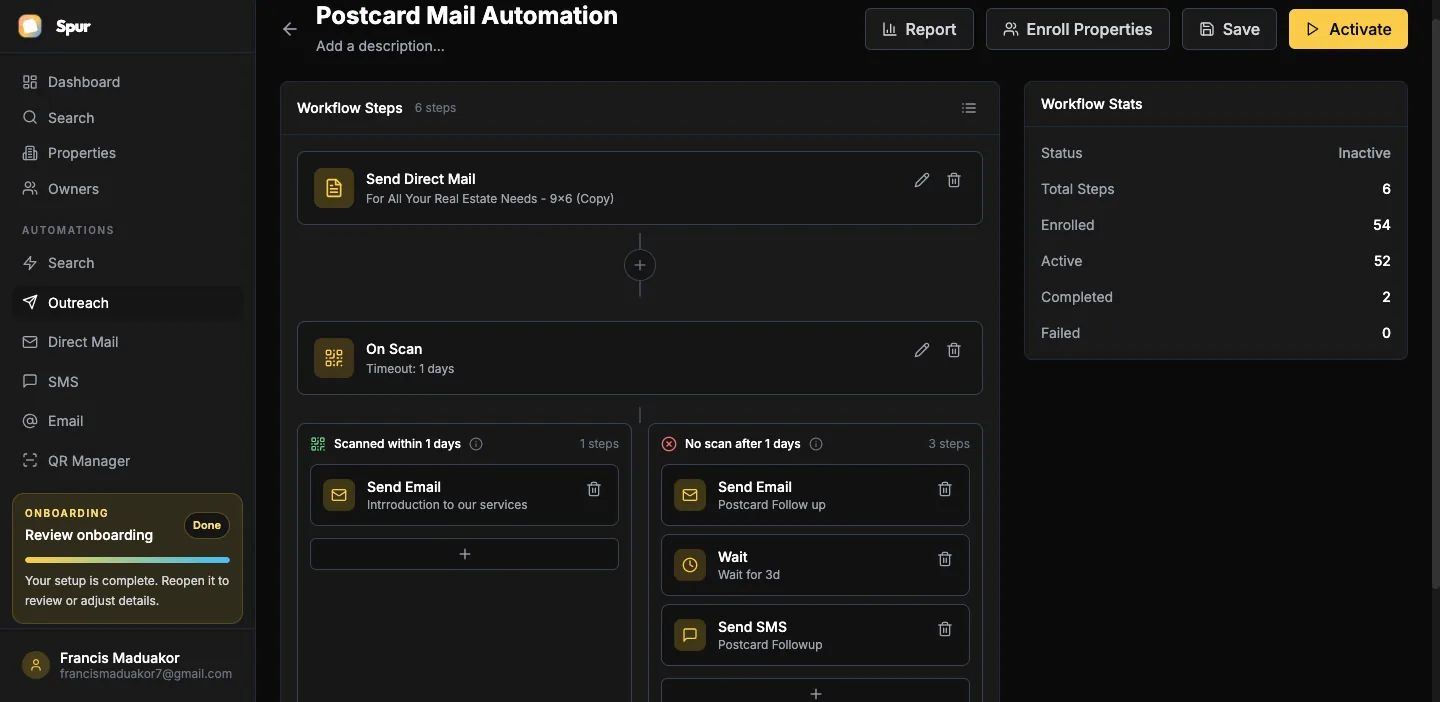
See it in Spur
A farm in Spur
Sample farm in one neighborhood, prioritized by ownership length and equity. Names are partly masked.
Houston HeightsSingle-familyOwner-occupied420 homes · 7.4% turnover
- Patricia O.82 Linden StOwned 17 yrs78% equityScanned
- David & Mei L.1416 Harvard StOwned 21 yrs85% equity
- Joan F.1123 Allston StOwned 29 yrs100% equity
- Hector & Ruth A.640 Columbia StOwned 13 yrs61% equity
- Ben & Sara K.1005 Rutland StOwned 9 yrs48% equity
AI draft for Patricia O. · 82 Linden St
Hi Patricia,
Here's what happened near you on Linden Street this spring: three homes within a few blocks sold in an average of 12 days, all at or above their asking price.
You've owned your home for about 17 years, so it may be worth more than you think. Even if you're not planning to move, it's useful to know.
Scan the code for a free, no-obligation home value. I'll send it within a day. And if you ever have a question about the neighborhood, I'm always happy to help.
Angela Kim · Heights Realty · (713) 555-0176
Sample data for illustration. Your results depend on your market and filters.
Playbook
How to choose and farm a neighborhood that produces listings
A farm is a defined group of homes you market to consistently, with the goal of becoming the agent homeowners think of when they're ready to sell. Farming works, but slowly. Most agents need six to twelve months of consistent mail before listings start, so choosing the right farm matters more than any single postcard.
Start with turnover rate: the number of homes sold in the last 12 months divided by the total number of homes. A neighborhood with 400 homes and 30 sales has a 7.5% turnover rate. Many coaches suggest looking for 6% or higher, but compare it to your market's average. Also check how much of that business is already going to one dominant agent.
Size the farm to your budget. A farm you can mail every month for a year beats a bigger one you abandon after three months. If 500 homes is your limit, start there and prioritize long-held, high-equity homes.
Make every card useful: recent sales near their street, a seasonal market update, or a home value offer. Then let the QR codes tell you who's interested. A homeowner who checks their home value twice in three months deserves a personal call.
30expected sales a year in a 400-home farm at 7.5% turnover
Farm math that works.
- 400 homes × 12 months × $1.09 per postcard on Team = $5,232 a year, plus $588 for Spur Team
- At 7.5% turnover, about 30 homes in the farm sell each year
- Winning 2 of those 30 at a $10,000 commission = $20,000 on about $5,800 of mail and software
Example math. Turnover, market share, and commissions vary by market. Run your own numbers →
One tool, not four
Spur vs. the usual farming workflow
What you needThe usual waySpur
Choosing a farmGut feel✓ Built in
Farm listTitle company farm report✓ Built in
Personal card per streetSame card for every home✓ Built in
Know who's curiousNo signal✓ Built in
Monthly sendingRemembering to reorder✓ Built in
From Agents using Spur
Results from the mailbox.
“The QR code alerts are the best feature no one talks about. I know exactly who's thinking about selling before I even call them. My listing conversion rate has never been higher.”
FAQ
Geographic farming questions
How do I calculate a farm's turnover rate?
Divide the number of homes sold in the last 12 months by the total number of homes. 30 sales in a 400-home neighborhood is 7.5%.
How big should my farm be?
As big as you can afford to mail every month for at least a year. For many agents, that's 300–500 homes to start.
How long does farming take to work?
Most agents see results after six to twelve months of consistent mail. Consistency matters more than any single card.
What should I put on farming postcards?
Recent nearby sales, seasonal market updates, and a home value offer. Each card should give homeowners a reason to keep it.
Is Spur better than EDDM for farming?
EDDM mails every address on a route with the same piece. Spur mails chosen homeowners by name, with a personal card and a per-household QR code.
Keep exploring
Related plays and guides
Start in minutes. No card required.
Pick the right farm, then show up every month.
Compare neighborhoods by turnover and build your first farm list today. Free to start.
Build my farm — freeFree forever plan · No card · 20 property searches a month
Prefer a walkthrough? Book a demo