
A crew spends days on one street, neighbors watch, and when the truck leaves, so does the chance to talk to them.
Basement waterproofing play · Neighbor marketing
Mail the street around every waterproofing job you finish.
When your crew is on a street, neighbors notice. Spur finds the homes around each install that share the same era and builder, writes a card that mentions the nearby project without naming the customer, and mails it so the next free check is a block away.
Free forever plan · No card · 20 property searches a month
USPSFirst-Class
Ray Dunleavy2502 Linden AveBaltimore, MD 21217Scan for a free neighbor inspection
Ray D. scanned your neighbor card · 7 min ago
AI-written for this owner · Mailed in 2 days
0.25 miradius around a job usually shares the same era and walls
Same weekmail while the crew and truck are still visible
No namescustomer privacy is protected, the street is not
The problem
Your best proof is on a street where you can't point to it.
Hanging flyers on doors takes hours, misses people who aren't home, and can't be tracked.
Mailing the whole zip reaches newer or slab homes that share nothing with the job you just finished.
How it works
From list to mailbox in one workflow.
Five steps from a finished install to a mailbox down the block.
app.usespur.com
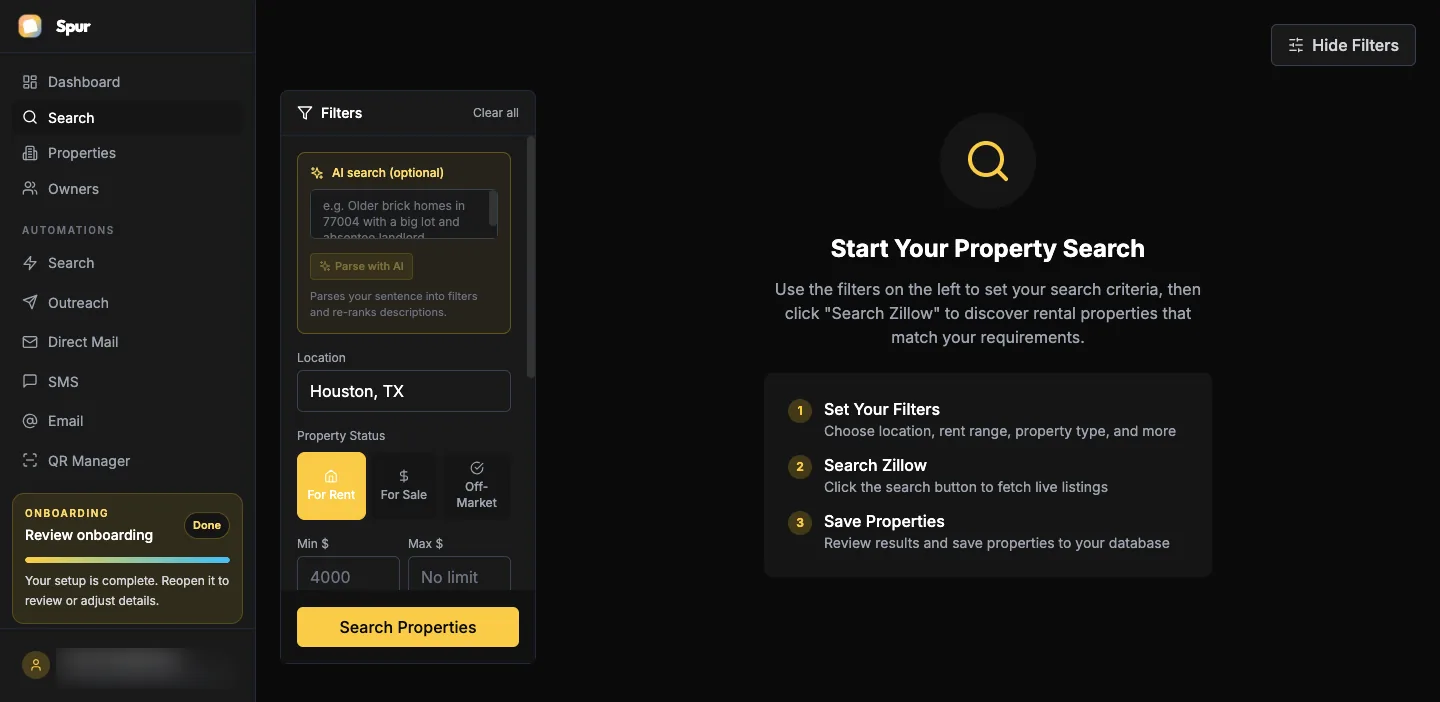
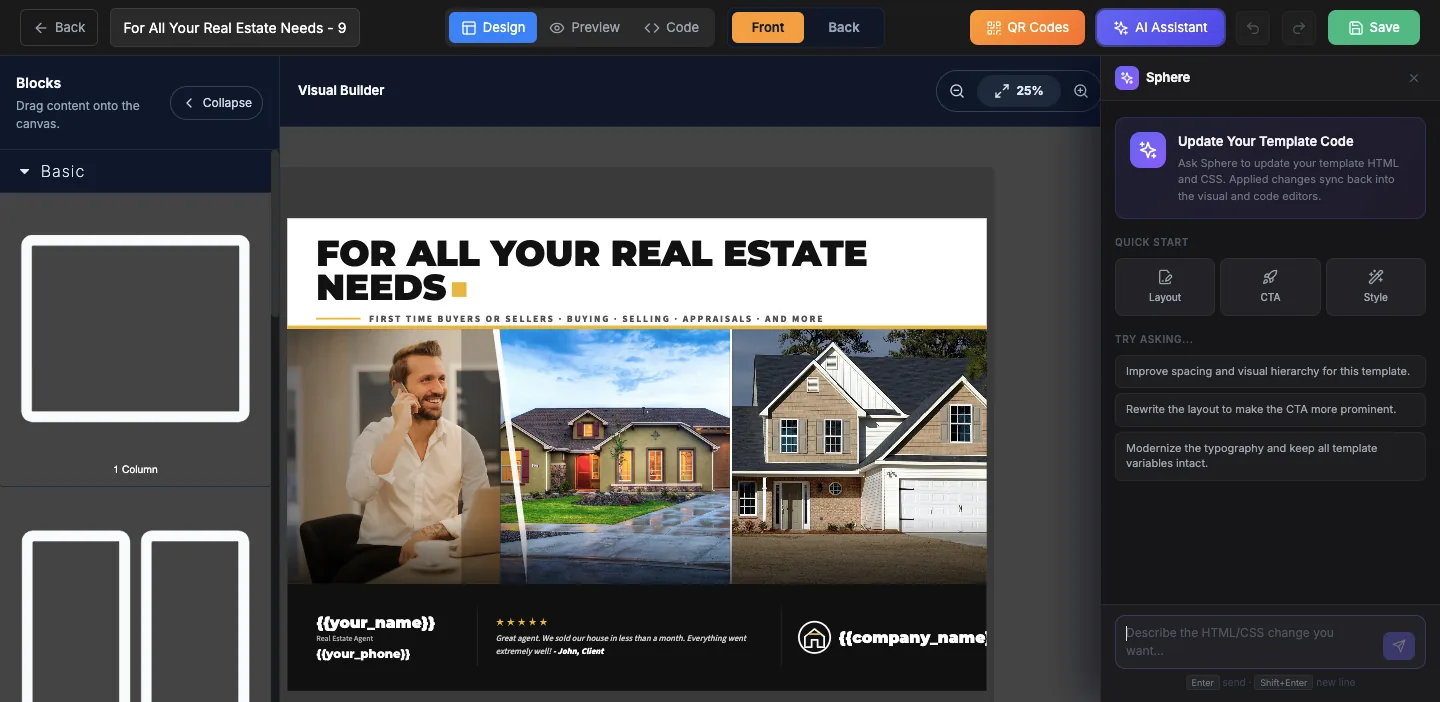
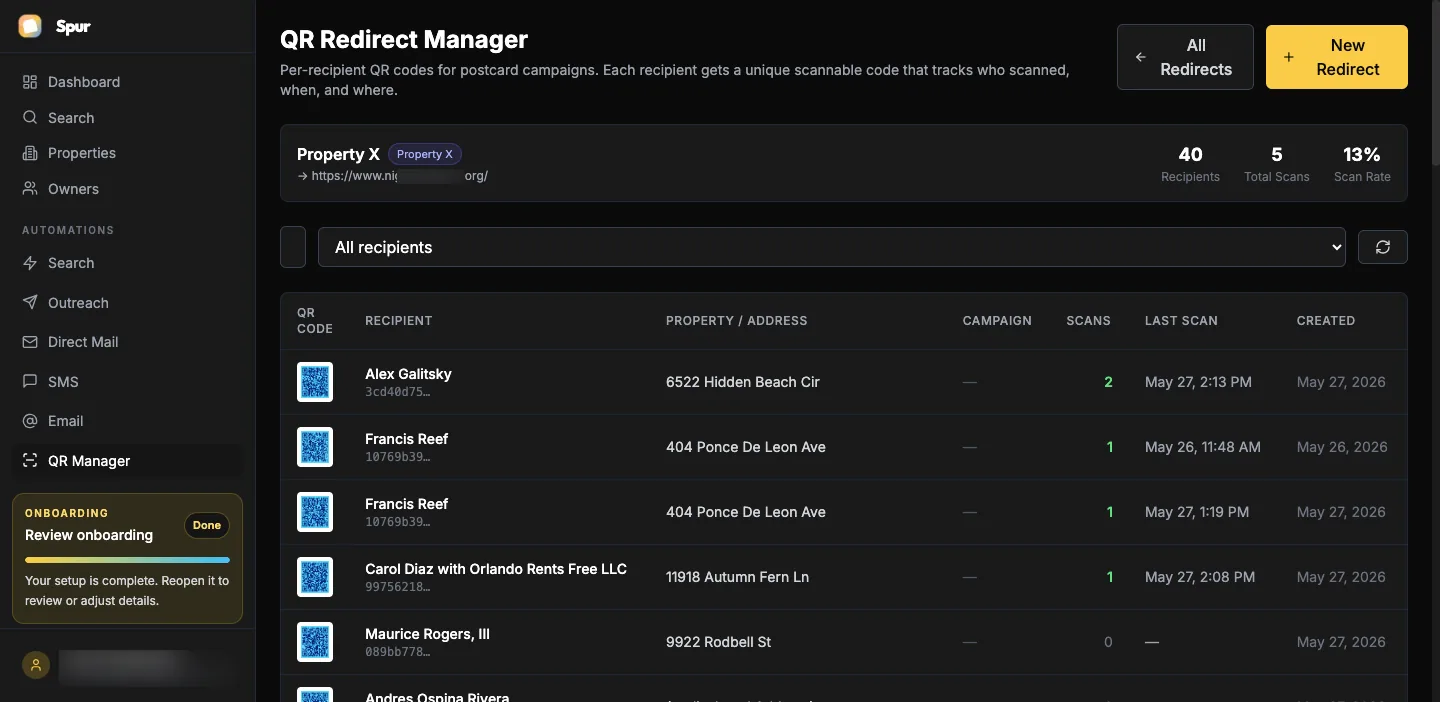
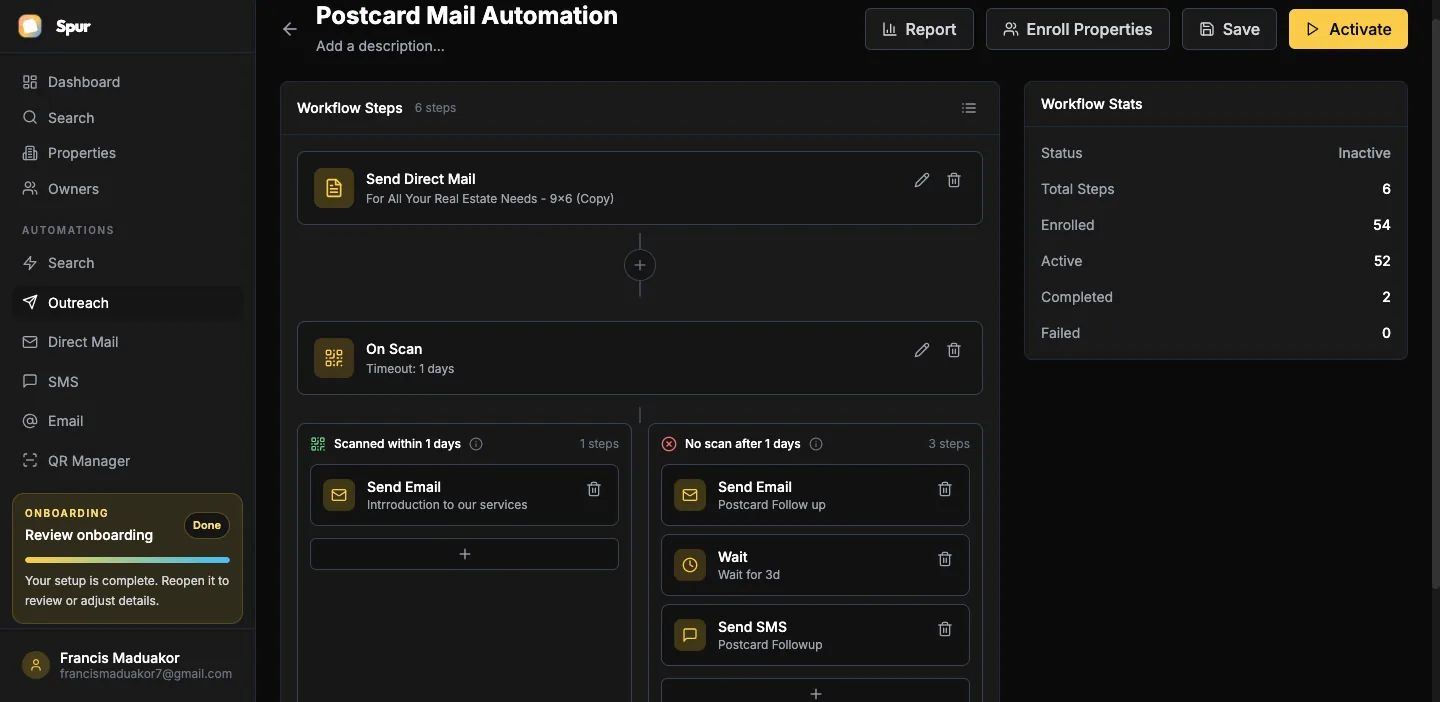
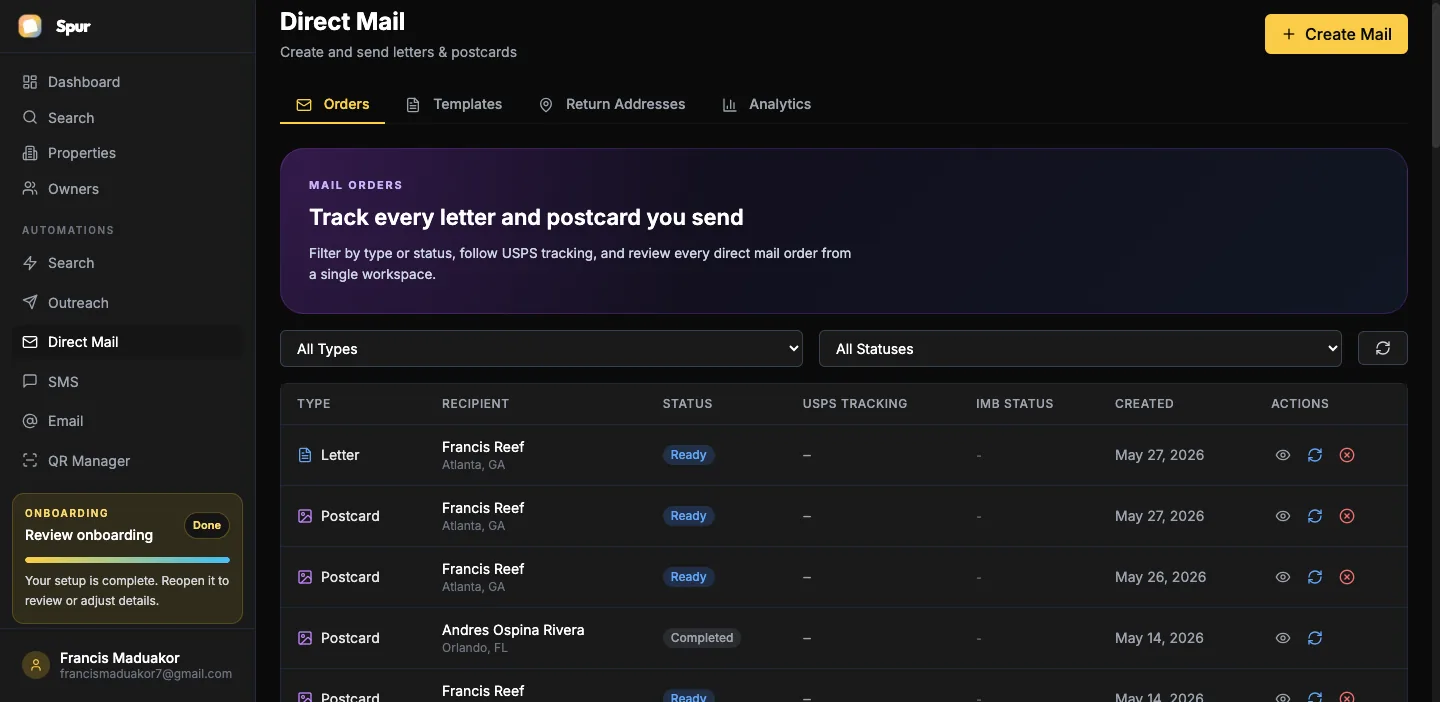
See it in Spur
A neighbor list in Spur
Sample Baltimore homes within a quarter mile of a Linden Avenue job, built within ten years of the same era. Names are partly masked.
Job: 2418 Linden AveRadius 0.25 miBuilt 1948–1965Owner-occupiedFull basement
- Ray D.2502 Linden AveBuilt 1956 · full basement3 doors away
- Alma & Ed J.2410 Linden AveBuilt 1955 · full basementNext door
- Tasha B.2615 Oakford AveBuilt 1960 · full basement1 block
- Wes & Dina P.2330 Linden AveBuilt 1954 · full basementAcross street
- Hal M.2701 Callaway AveBuilt 1962 · full basement2 blocks
AI draft for Ray D. · 2502 Linden Ave
Hi Ray,
Our crew just finished a basement project a few doors from you on Linden Avenue. Homes on this street were built in the mid-fifties with block walls and original drain tile, so we thought neighbors might like a free look while we're nearby.
We'll check the walls, the floor edge, and the pump, and tell you plainly what we find, including what you can fix yourself. There is no obligation.
Scan the code on this card to pick a time this week.
Evan Park · Harbor Basement Systems · (410) 555-0171
Sample data for illustration. Your results depend on your market and filters.
Playbook
Why neighbor marketing works so well for waterproofing
Homes on the same street are usually built within a few years of each other, by the same builder, with the same block walls, the same drain tile, and the same grading. A problem in one basement is often a problem in several. That makes the street around a finished waterproofing job one of the highest-intent lists you can mail, because the data and the story are already on your side.
The card does most of its work by being specific. It says you were just working a few doors away, that the homes on the street share an era and foundation style, and that you are offering a free inspection while your crew is nearby. Owners are curious when they see a truck, and the card answers what they were already wondering.
Privacy matters. Never name the customer, show their address on the card, or imply anything about their situation. Say you recently completed a project on the street and leave it there. Most customers are happy to be a reference, but the card shouldn't make that decision for them.
Timing is the second lever. Mail within a few days of the job, while the truck and crew are still visible. A card that arrives two weeks later feels like a coincidence, while one that arrives that week feels like service. Because your crew is nearby, you can also offer same-week inspections, which is an advantage over any other company.
Make the program routine. Set up a standing neighbor campaign for every install over a set size, and let Spur mail the surrounding homes automatically. A steady stream of nearby inspections lowers your travel time and your cost per lead, and the reputation you build in a neighborhood compounds job after job.
One more advantage is operational. Neighbor inspections can be scheduled on the same day as the crew's route, which cuts drive time and lets a salesperson see two or three homes in one trip. Over a season, that efficiency lowers your cost per inspection, and the stack of nearby references makes each later conversation easier, because the owner has probably already seen your work from the sidewalk.
15×+return on a year of Spur Team from a handful of neighbor installs
Neighbors close faster and cost less to reach.
- Spur Team: $49/mo billed annually = $588/yr
- 12 jobs × 100 neighbor cards at $0.94 each = $1,128
- 3 neighbor installs (~$6,500 each) ≈ $19,500, with no extra travel time
Example math. Your install volume, price, and close rate will vary. Run your own numbers →
One tool, not four
Spur vs. the usual job-site marketing
What you needThe usual waySpur
Mailed to matching homes within a quarter mileFlyers on a few doors✓ Built in
Copy that mentions the nearby project, not the customerA yard sign✓ Built in
Scan alerts by householdNo sign who saw it✓ Built in
Automatic card for every installRemember to do it each time✓ Built in
Mailed in days, no door knockingHours on foot✓ Built in
Neighbor Marketing by the numbers
Why the street around a job is worth mailing
30–50%
indoor relative humidity range recommended to limit mold and dust mites
24–48 hrs
is how quickly mold can begin to grow on materials left wet
15×+
return on a year of Spur Team from a handful of neighbor installs
FAQ
Neighbor marketing questions
Is it okay to mention a nearby job on a postcard?
Yes, as long as you don't name or identify the customer. Say you recently completed a project on the street and offer neighbors a free inspection.
How large should the radius be?
A quarter mile works for most neighborhoods. In dense areas, use a few blocks. Match the build era so you reach homes with similar walls and drains.
How soon should I mail after a job?
Within a few days, while the truck and crew are still visible. Spur mails first-class, usually within two business days of approval.
Can I automate a neighbor card for every job?
Yes. Save a neighbor campaign, enter each job's address, and Spur finds the surrounding homes and mails the card on approval.
Keep exploring
Related plays and guides
Start in minutes. No card required.
Turn one finished basement into the next five.
Drop in your last job's address and mail the street this week. Free to start.
Mail the neighbors of my last job — freeFree forever plan · No card · 20 property searches a month
Prefer a walkthrough? Book a demo