
Spring startups and fall winterizations fill in a few weeks. If your card isn't in the mailbox first, the homeowner books someone else.
For irrigation and sprinkler companies
Irrigation leads for spring startups, winterizations, and repairs.
Spur finds homes in your service area most likely to have in-ground sprinkler systems, writes a seasonal postcard for each owner, and mails it ahead of spring startup and fall winterization. Every startup customer becomes a winterization customer, and your routes get denser each season.
Free forever plan · No card · 20 property searches a month
USPSFirst-Class
Jennifer Hayes9842 Autumnwood PlHighlands Ranch, CO 80130Scan to book your startup
Jennifer H. booked a spring startup from your postcard · 2 min ago
AI-written for this owner · Mailed in 2 days
2 visitsa year in freeze climates: startup and winterization
Annualbackflow testing required by many water utilities
2 daysfrom approval to USPS first-class
The problem
Irrigation work clusters into a few busy weeks, and most companies market too late.
Generic mail goes to homes with no in-ground irrigation, which wastes most of the budget.
Broken heads, leaky valves, and outdated controllers are easy upsells, but homeowners rarely ask until the lawn browns.
How it works
From list to mailbox in one workflow.
The same five steps every time, set up for irrigation & sprinkler companies.
app.usespur.com
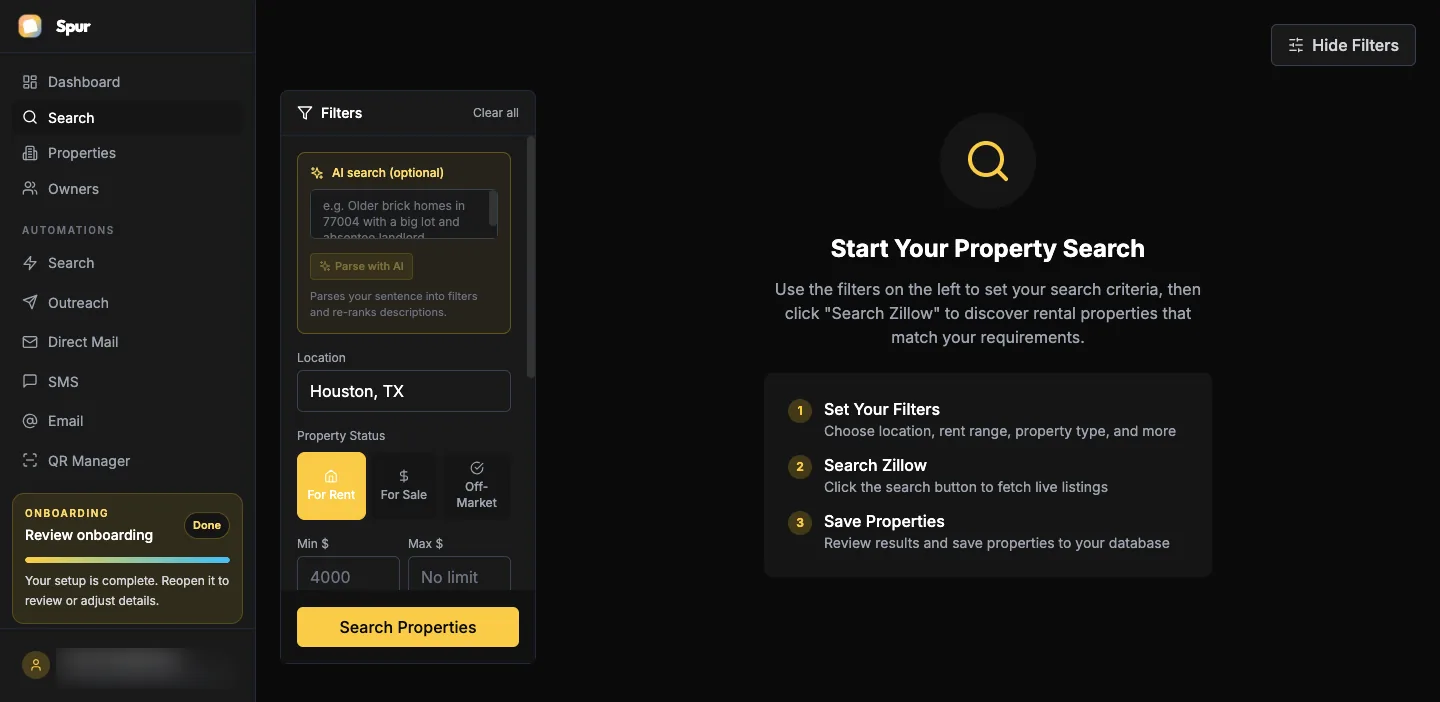
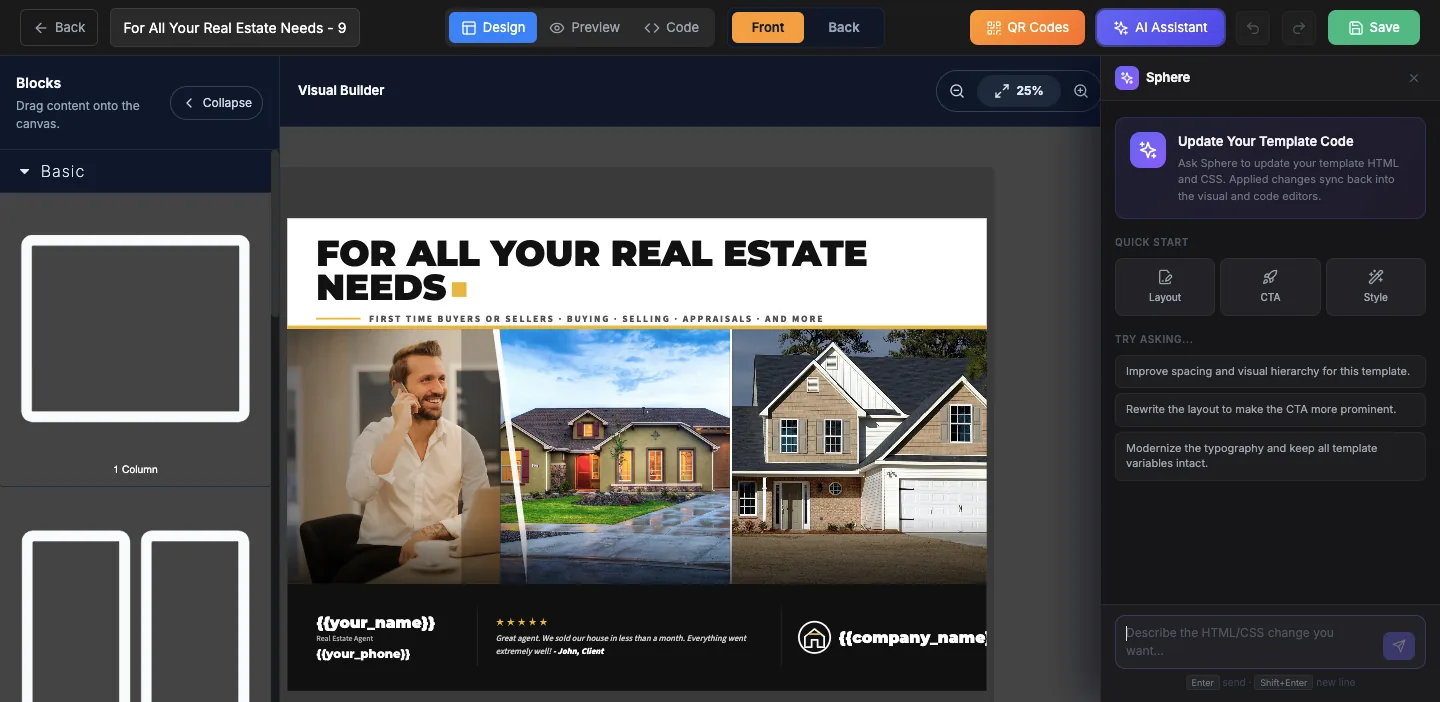
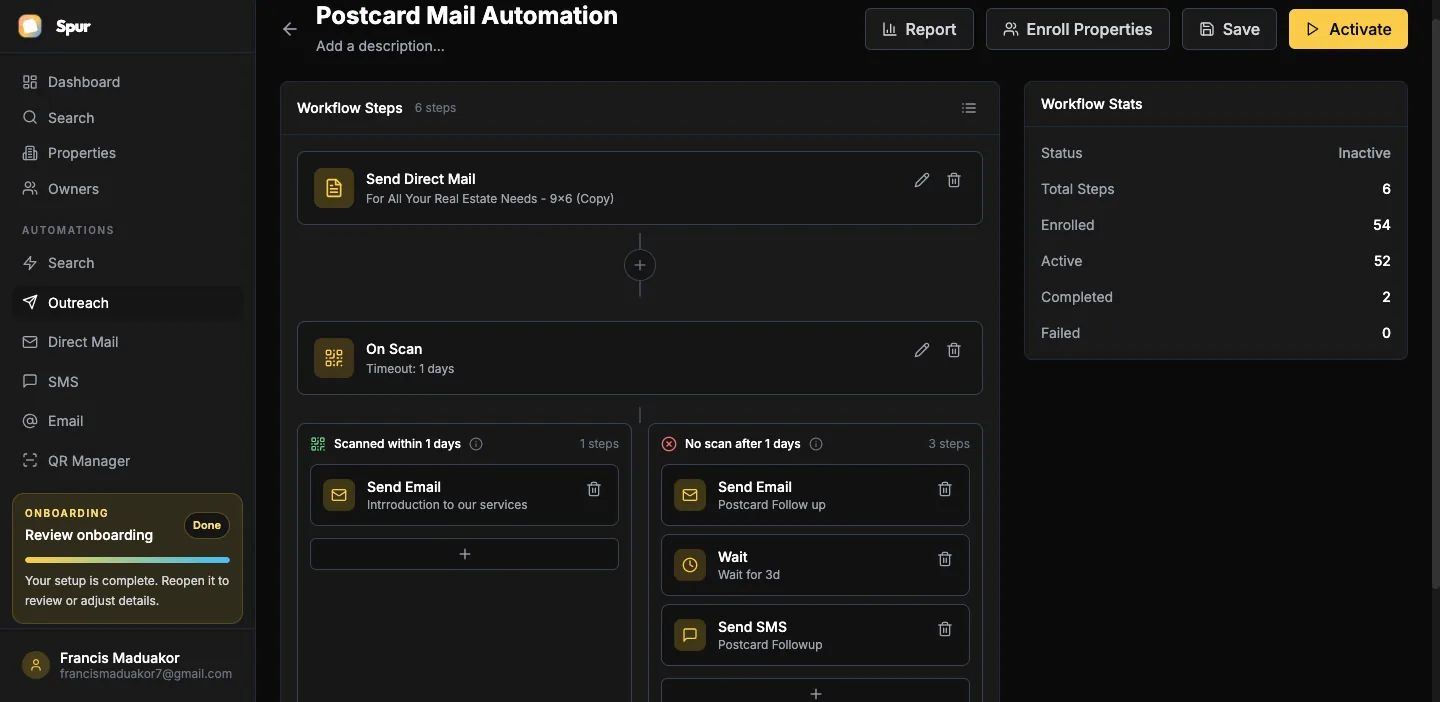
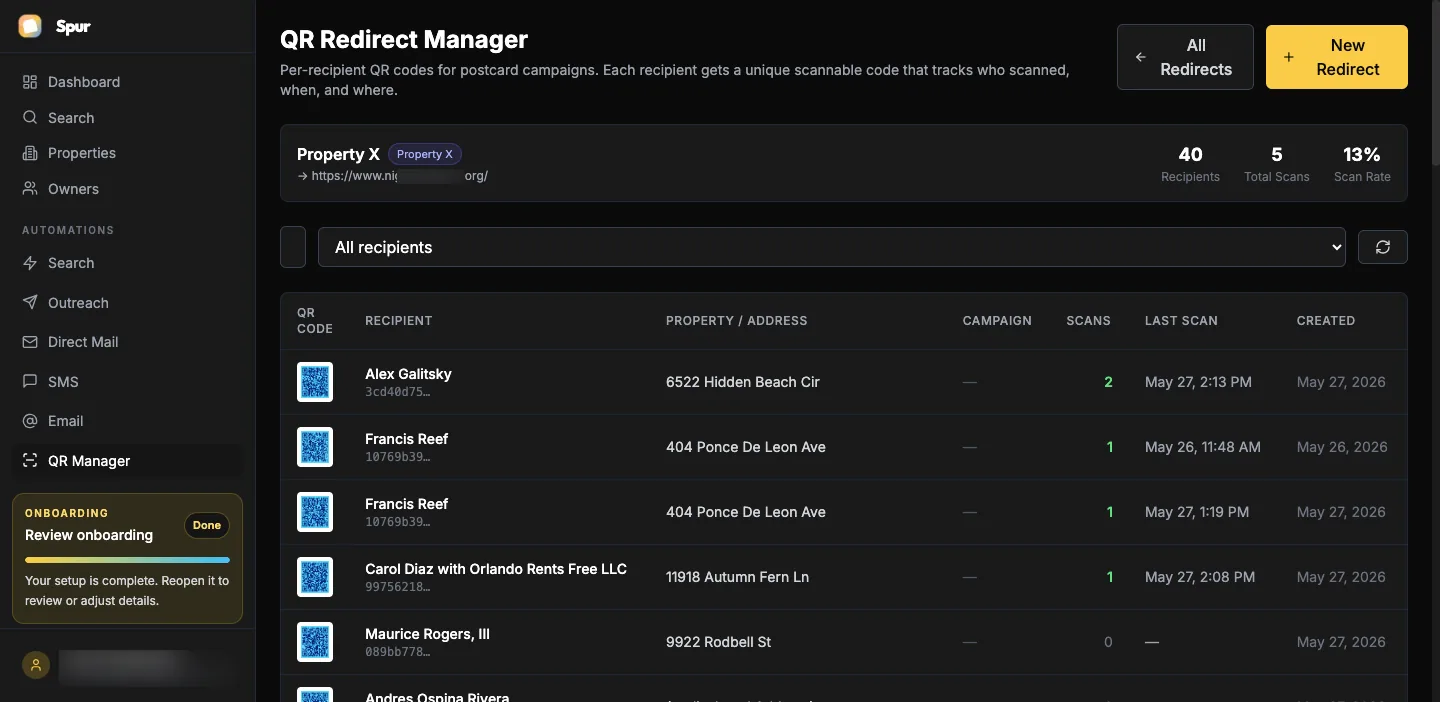
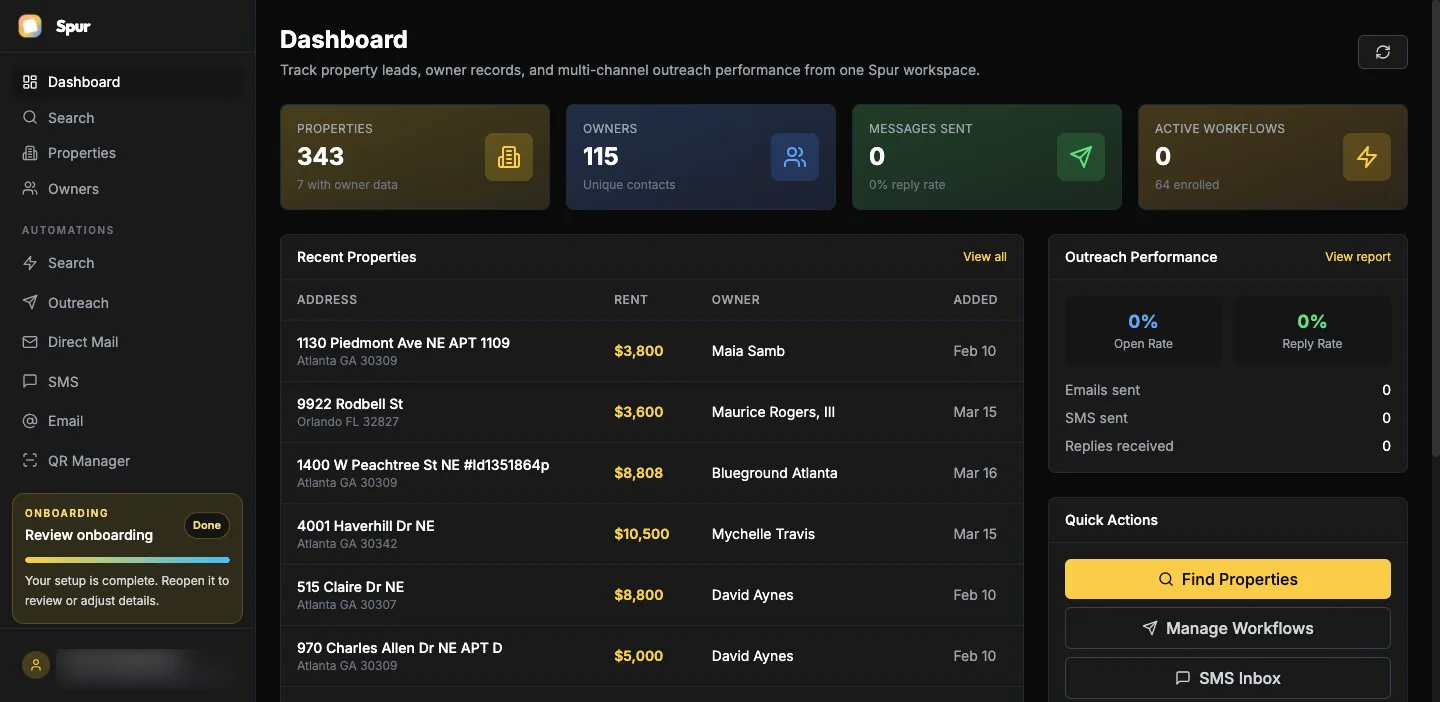
Plays for Irrigation
Irrigation plays you can run in Spur today
Spring startupsBackflow testing New system installs New homeownersDrought and water restrictions Sprinkler postcards
Book startups before the first warm week.
Auto-scheduleOwner-occupied
See the full play →Fall winterizationBlowouts before the first hard freeze.
Freeze zipsYour list
See the full play →Smart controller upgradesWeather-based controllers that cut water use.
Built 1995–2012Lot 0.25+ acre
See the full play →Annual tests many water utilities require.
Your listOwner-occupied
High-value homes on larger lots without systems.
Value $600K+Lot 0.3+ acre
Buyers who don't know how their system works.
Sold last 90 daysBuilt 1995+
See the full play →Neighbor marketingMail the subdivision around each job.
Radius 0.25 miSame subdivision
See the full play →Efficiency audits when restrictions tighten.
Your zipsLot 0.25+ acre
Seasonal cards with a price per zone and a one-scan booking.
Per-home copyQR tracked
See the full play →Direct mail programFour standing lists that book visits all year.
Auto-scheduleCost per booking
See the full play →Seasonal campaignsStartup, summer efficiency, and fall blowout cards.
Auto-scheduleYearly
See the full play →Leads without AngiExclusive booking requests from homes you chose.
ExclusiveInbound first
See the full play →Past customer reactivationRebook last year's customers before startup.
Your listVisited 11+ mo ago
See the full play →Landlord portfoliosSprinkler plans across rental portfolios.
Absentee owner2+ properties
See the full play →See it in Spur
What an irrigation list looks like in Spur
A sample list for one Highlands Ranch zip: owner-occupied single-family homes built 1995–2010 on lots of 0.2 acre or more. Names are partly masked.
Zip 80130Owner-occupiedBuilt 1995–2010Lot 0.2+ acreSingle-family
- Jennifer H.9842 Autumnwood PlBuilt 2001 · 0.24 acreOwned 11 yrsLikely 6 zones
- Steve & Lori M.9871 Autumnwood PlBuilt 2002 · 0.29 acreOwned 18 yrsCorner lot
- Kyle D.10115 Bluffmont DrBuilt 1999 · 0.22 acreBought 2 mo agoNew owner
- Pam R.10133 Bluffmont DrBuilt 2000 · 0.26 acreOwned 23 yrsOwner 68
- Eric & Sun L.3561 Saddleback CtBuilt 2004 · 0.31 acreOwned 9 yrsLarge yard
AI draft for Jennifer H. · 9842 Autumnwood Pl
Hi Jennifer,
Our crews will be starting sprinkler systems in your part of Highlands Ranch from mid-April. Starting your system the right way (opening the backflow slowly, checking each zone, and replacing heads that cracked over winter) prevents most of the leaks and dry spots we see in June.
Our spring startup is $69 for up to six zones and includes a controller update for the season. If your controller is more than ten years old, ask us about a weather-based smart controller, which adjusts watering automatically and can cut water use noticeably.
Scan the code on this card to pick a date. We'll also put you on our fall winterization list so you don't have to remember.
Sam Patel · Front Range Sprinkler Co. · (303) 555-0141
Sample data for illustration. Your results depend on your market and filters.
Playbook
How to grow an irrigation business with seasonal mail
Irrigation service is built on a seasonal rhythm. In freeze climates, every in-ground system needs a spring startup and a fall winterization, usually a compressed-air blowout to keep lines from cracking. In warmer climates, the rhythm is repairs and efficiency upgrades through the long watering season. Either way, the work clusters into predictable windows, and the companies that mail before those windows open get booked first.
Target the homes that actually have systems. In-ground irrigation is most common in newer subdivisions on larger lots and in higher-value neighborhoods, and far less common in older urban neighborhoods. You likely already know which subdivisions are full of systems. Spur lets you target them by zip, radius, build year, lot size, and owner occupancy so your mail isn't wasted on homes with a garden hose.
Each season is a chance to sell the next one. Every startup customer should be booked for winterization on the spot, and every winterization customer should get a reminder in late winter. Over a few years, that repeat list becomes your route, and new campaigns focus on filling it in street by street.
Upgrades are where the margin is. Controllers older than about ten years are good candidates for weather-based smart controllers, many of which carry the EPA WaterSense label, and water utilities in some regions offer rebates for them. Many utilities also require annual backflow prevention testing, which is a recurring, compliance-driven service worth marketing on its own.
Finally, mail new homeowners. Buyers often inherit a sprinkler system with no instructions, a controller set by the previous owner, and no idea when to winterize. A welcome card offering a startup and walkthrough is helpful, and it turns into a long-term customer.
Use your dashboard to plan routes. Startups and winterizations are short, repetitive visits, so the more customers you have in one subdivision, the more systems a crew can handle in a day. Track bookings by street and aim new campaigns at the gaps between existing customers.
4 homeson startup, winterization, and one repair cover a year of Spur Team
A handful of seasonal customers covers your year of Spur.
- Spur Team: $49/mo billed annually = $588/yr
- 300 postcards on Team at $0.94 each = $282
- One home ≈ $69 startup + $69 winterization + typical repairs, every year
Example math. Your pricing and retention will vary. Run your own numbers →
One tool, not four
Spur vs. the usual irrigation marketing
What you needThe usual waySpur
Target subdivisions with systemsEDDM routes✓ Built in
Owner name and mailing addressNot available with EDDM✓ Built in
Seasonal copy with pricingGeneric flyer✓ Built in
Schedule both seasons in advanceRemember each year✓ Built in
Know who's interestedNot available✓ Built in
Route density trackingSpreadsheet✓ Built in
Irrigation by the numbers
Why irrigation upgrades pay off
Up to 50%
of water used outdoors is wasted by inefficient watering
~7,600 gal
saved a year by the average home that swaps a clock timer for a WaterSense labeled controller
4 homes
on startup, winterization, and one repair cover a year of Spur Team
FAQ
Questions from irrigation & sprinkler companies
How do sprinkler companies get more customers?
Target subdivisions where in-ground systems are common, mail spring startup and fall winterization offers four to six weeks ahead, and book the next season on every visit.
Can Spur tell which homes have sprinkler systems?
Not directly. Build year, lot size, home value, and subdivision are strong proxies, and most irrigation companies already know which neighborhoods are full of systems. Spur lets you target those areas precisely.
When should I send winterization postcards?
Four to six weeks before your area's typical first hard freeze, so homeowners book before the rush.
Should I market backflow testing separately?
Yes, where your water utility requires annual testing. It's a recurring, compliance-driven service and a good entry point for repairs.
What does Spur cost for an irrigation company?
Solo is free forever with no card. You pay per postcard when you mail. Team is $49/mo billed annually with more searches, QR codes, automations, and lower postcard pricing.
Keep exploring
Related trades and guides
Start in minutes. No card required.
Startup season is coming. Be the first card in the mailbox.
Build an irrigation list for your service area and schedule both seasons today.
Find homeowners with sprinkler systems — freeFree forever plan · No card · 20 property searches a month
Prefer a walkthrough? Book a demo